Interpreting design in draping
By Patsy Kam
WHEN the assignment on "the art of draping" was given out, no one had a clue what it was all about. Draping what? Curtains? Clothes? Or sarees? It turned out to be clothes, and boy, was I in for a learning experience.
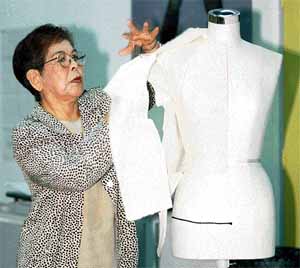
I had no idea that draping cloth over a mannequin is an art by itself, but according to designer Rene Oshiro, who has worked with fashion moguls like Calvin Klein and Georgio Sant Angelo, the ability to drape designs can make or break a fashion couturier's career.
Japanese American Oshiro teaches the art of draping, which is also known as "three-dimensional design", at the Parsons School Of Design in New York. She is currently on a two-year contract with the Center For Advanced Design in Kuala Lumpur to lecture on the same subject.
"Every great designer in Paris drapes his or her designs. It takes five to 10 years before you are recognised as a designer in your own right, so in the meantime you just have to practise a lot. American designers on the other hand, depend on technical assistants to drape their designs for them and if a good assistant leaves, it may spell a total change of the designer's career," says Oshiro, who hails from Hawaii.
`Ultimately, the designer must decide on a concept _ are you out to change people? Fashion designing is about creating that something special which makes you stand apart from others.' _ Rene Oshiro, designer
|
During a short session with the International Women's Association, Kuala Lumpur, last month, Oshiro explained that draping is a very important part of designing but the least understood.
"Draping is all about how you interpret a design. The grain of the fabric and how it falls will also determine how the pattern will turn out in the end. In the beginning when I was working as a technical assistant, I used to get scolded by designers all the time when the garment didn't fall correctly or look right."
After more than 35 years in the fashion industry, Oshiro is still very fussy over her muslin (fabric used for draping) and irons all the pieces herself just before her classes.
"It's not a big deal to some people, but I feel it takes too much trouble to explain the technical details and how I want the fabrics ironed and turn out just so. In the end, it's easier to do it myself."
To the untrained eye, draping seems simple--cut here, pin there and voila! your dress is ready. But a professional like Oshiro will tell you that the way you cut and place the pins, and where the seams and pleats are positioned, determine a successful design. Even the way you move your fingers over the cloth counts, she insists.
For someone who has worked in the fashion industry for so long, it is not surprising that Oshiro has her finger on the pulse of New York fashion.
"Fashion is truly a personal statement. What you wear at this moment is a sign of self-expression. In New York, there are so many colours and designs, it's amazing and so exciting. It's a very fashion-conscious society.
"Malaysia, on the other hand, is quite different as everyone follows only one trend and dressing is rather subdued. Maybe that's because you have a dress code to follow in the office and are not allowed to be flamboyant. But I love the Malay baju kurung and the various versions of it; the brilliance and the artistic combination of the colours are superb."
Teaching Malaysian students is a very different cup of tea indeed, she finds.
"When the opportunity for a teaching position in Asia came up, I was the first to grab it. I've been dying to share with Asians, my people, the art of draping. Over here though, I find students very reserved and not half as competitive as the ones in the United States.
"The classes are also much smaller here which means the students get personal attention. Back home, there are hundreds of children (they're not that young but I call them all my children) in one class, and after one explanation, you're expected to catch the drift of the lesson."
After so many lessons from life's school of hard knocks, Oshiro has one practical piece of advice for aspiring designers:
"Fashion is a business and, let's face it, you're really out there to make money. So while it can be fun doing outlandish outfits, they are not going to sell. Ultimately, the designer must decide on a concept--are you out to change people? Fashion designing is about creating that something special which makes you stand apart from others."
In other words, most of the designer labels that have made it big are the ones whose clothes you see worn on the streets, and not the ones you only see on the fashion runway. And on top of that, Oshiro is a great advocate of sales!
"The joy of shopping is when you can get away buying some designer piece at a fraction of its original price!"
Oshiro didn't start out as a designer. She worked in a TV studio and later as a secretary before she decided one day that she hated what she was doing. Since she loved making clothes, she went back to school when she was in her 30s, Parsons in particular, where she is still teaching today.
In case you're wondering, I do know her age; just that this grand lady of design refuses to let me print it. Let's just say she's old enough to be my grandmother but doesn't look a day over 50!
"Oh, let's not talk about age--there are so many other interesting things to discuss. Besides, age is all in the mind - you're about as old as you feel!"
The energetic Oshiro loves to travel and has been all over the world. She is planning a trip to China next.

 "Rilek lah aje, usahlah pikir Mahazalim setiap siang malam, tenangkan minda, bacalah Edisi RILEKS !"
Datuk Seri Anwar
"Relax,don't think about Mahazalim every day N night, be cool, read RELAX Edition."
Dr. Wan Azizah
|
|